
Move the gasline across the finish line!
It All Begins Here
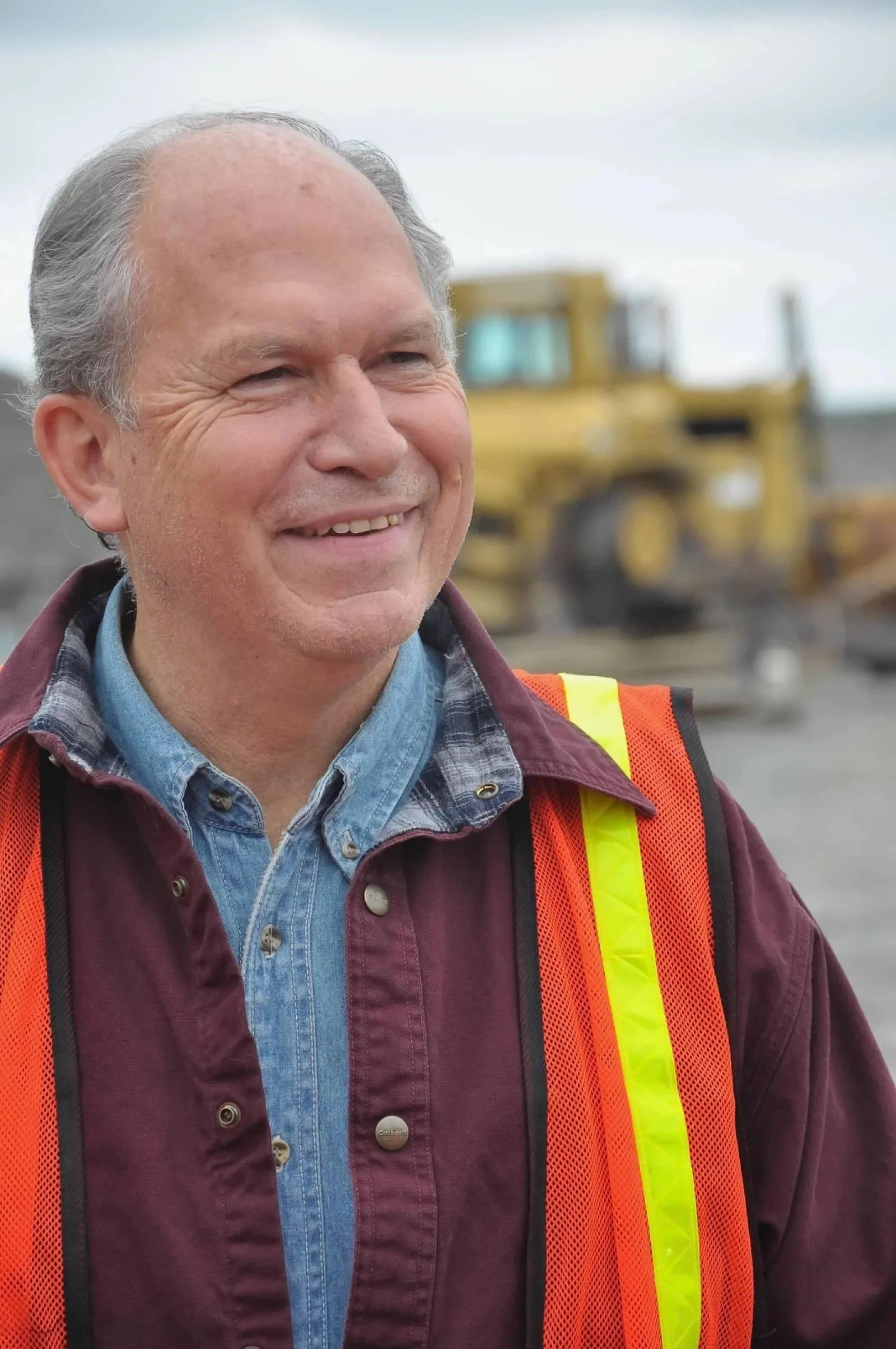
Alaska stands at a pivotal moment in the development of the Alaska LNG Project and the Trans Alaska Gasline. Without question, this is the most important infrastructure opportunity for Alaska since construction of the Trans Alaska Pipeline System (TAPS). Projects of this magnitude require consistency, credibility, transparency, and long-term commitment. Changes in administrations and shifting political priorities can easily disrupt momentum on a project that has taken decades to advance. That is why experienced leadership matters.
In 2017, President Trump invited Governor Walker to Washington during Energy Week. During a meeting at the White House, Walker discussed Alaska’s gasline project and the need to reach Asian markets. President Trump applauded those efforts and helped facilitate high-level discussions that put the project on the world stage. A few months later, President Xi and senior Chinese officials stopped in Anchorage, at President Trump’s request, following meetings at Mar-a-Lago. The purpose was simple: to explore whether Asian customers would purchase Alaska LNG. This was not about giving Alaska’s resources away. It was about creating customers for Alaska gas, creating Alaska jobs, and generating revenue for Alaska families.
President Trump helped lead the charge on Alaska LNG then, just as he supports Alaska LNG today. The project being pursued today is different from the one advanced during the Walker administration, but the goal remains the same: getting Alaska gas to market and lowering energy costs for Alaskans.
-
My involvement with Alaska’s gasline began shortly after the first barrel of oil arrived in Valdez in 1977. Over nearly five decades, I have worked on the project from multiple perspectives — as an attorney, advisor, negotiator, businessman, and governor. In 2007, I assembled an Alaska gasline consortium consisting of Bechtel, Sempra Energy, Mitsubishi, Williams Pipeline, and BG Group and submitted a bid to the Alaska Gasline Inducement Act (AGIA) to bring the gasline to tidewater in Southcentral for Alaska’s use and LNG export. Unfortunately, the contract went to TransCanada.
Before becoming governor, I regularly conducted extensive gasline briefings for Alaskans, policymakers, and business leaders — including then incoming State Senator Mike Dunleavy.
Randy Hoffbeck also brings considerable experience to the gasline effort. Under Governor Murkowski, he served as the state petroleum property assessor and was the lead negotiator on property tax issues on Murkowski’s gasline proposal. It was under Randy’s direction that the Municipal Advisory Group was formed that gave local governments a voice in PILT (Payment in Lieu of Taxes) negotiations and those negotiations were successful.
Similarly, as the Commissioner of Revenue in our administration, Randy was the lead negotiator on property tax issues on the industry pipeline. Under Randy’s direction, the Municipal Advisory Group was reconstituted and a PILT successfully negotiated. As property tax issues are a major sticking point in the current pipeline legislation, no one is more qualified to lead on that issue than Randy Hoffbeck.
-
Advancing the gasline was one of the primary reasons I ran for governor in 2014. At that time the Alaska LNG Project had four equal partners: State of Alaska, ExxonMobil, BP, and ConocoPhillips. In 2015, all three producer partners informed me in a board meeting that they intended to withdraw from the project and suspend further permitting work.
Rather than allow the project to be shelved, our administration negotiated the transfer of approximately $500 million in project work product and permitting assets from ExxonMobil, BP and ConocoPhillips to the Alaska Gasline Development Corporation (AGDC) at no cost to the state. Because of that decision, the federal permitting process continued uninterrupted and was ultimately completed.
As governor, I personally promoted Alaska’s gasline project at the highest levels of national and international leadership. On the marketing side, I met with the presidents/prime ministers of four Asian countries, had multiple meetings with two U. S Presidents and their Administrations. On the gas supply side, I met with the presidents on several occasions of ConocoPhillips, ExxonMobil, BP and later, Hilcorp. That work resulted in our receiving fifteen MOUs with some of the world’s largest LNG buyers in Asian countries plus gas offtake agreements with all producers. This project received the full support of President Trump and our team traveled with the President and his team for the signing of memoranda of understanding (“MOU”) in Beijing and in Vietnam.
-
Likewise, the current project with Glenfarne is fully supported by the Trump administration and we are experienced and ready to hit the ground running to lead it to completion.
We strongly support the momentum currently being advanced under Governor Dunleavy, AGDC, and Glenfarne. Alaska cannot afford take its foot off of the gas at this critical moment.
As governor and lieutenant governor, we will work cooperatively to ensure transparency, continuity and stability for the project without political disruption or delay. At the same time, if the current structure or private partnership does not ultimately proceed, I will be prepared — drawing on nearly 50 years of experience with this project — to conduct a transparent and honest evaluation of the project’s long-term viability and publicly share those findings with Alaskans.
-
Randy Hoffbeck also brings direct gasline experience to this effort. As Alaska’s State Petroleum Property Assessor during the Murkowski administration, Randy was the lead negotiator on property tax issues related to the gasline project. Under his leadership, the Municipal Advisory Group (MAG) was formed to ensure local governments had a meaningful voice in Payment In Lieu of Taxes (PILT) negotiations, resulting in a successfully negotiated PILT framework.
Later, as Commissioner of Revenue, Randy again served as the lead negotiator on property tax matters involving the industry-led pipeline project. He reconstituted the Municipal Advisory Group and once again successfully negotiated a PILT agreement among the parties. Those experiences are particularly relevant today, as property tax and PILT issues remain among the key challenges in advancing current gasline legislation and achieving broad statewide support for the project.
Our commitment is to push this project forward with complete transparency at every step. We anticipate that the legislature will ultimately land on what’s best for Alaska in developing an acceptable fiscal structure and the project will continue moving forward. But if for some reason the project stalls, as it did in 2015 when the producers bowed out, there is no ticket more qualified and experienced than Walker-Hoffbeck to keep the project on track.